

Sony FX5 Cinema Camera with XLR Handle Unit

Pre Order
Rs 1852500
.00
New Release
-
Style
What's in The Box
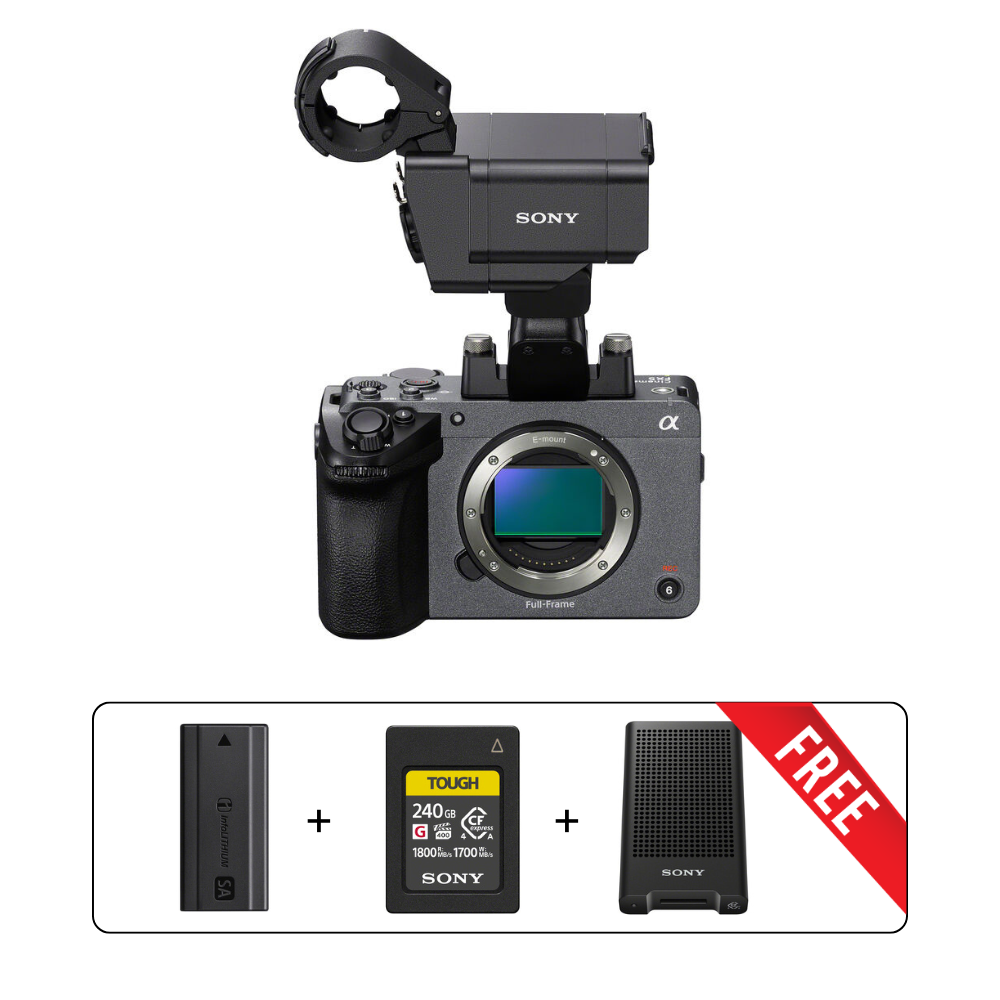
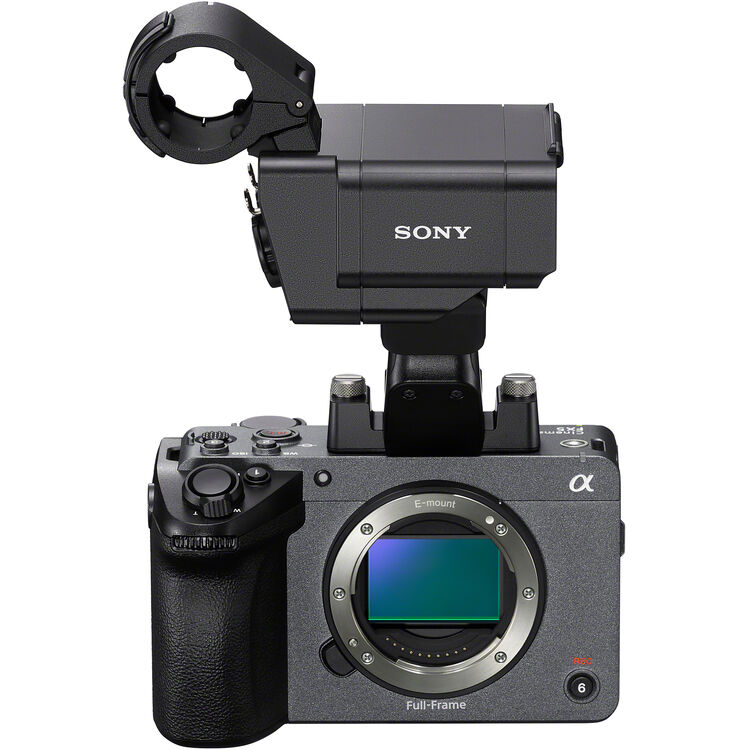
- Sony FX5 Cinema Camera with XLR Handle Unit
- Sony XLR-H2 XLR Handle Unit
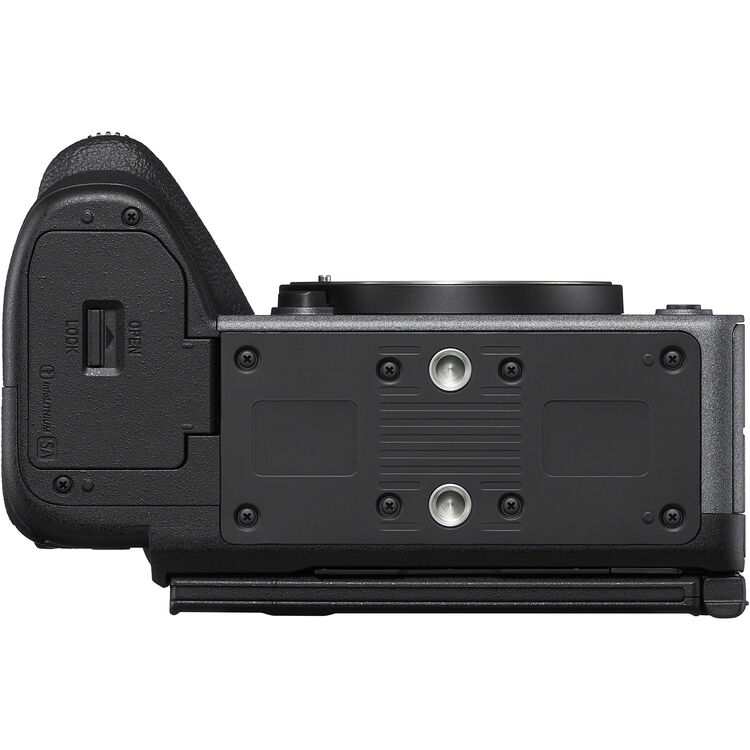
- Sony NP-SA100 Battery (2670 mAh)
- Sony BC-SAD1 Battery Charger
- Sony Multi Interface Shoe Cap
- Sony ALC-B1EM Body Cap (Sony E)
Key Features
- 5K 16.6MP Stacked Full-Frame Sensor
- 5K60 Open Gate (3:2) & 5K120 (16:9)
- Internal X-OCN Raw Recording
- Triple Base ISO | Dual Gain Mode
Pre Order
Rs 1852500
.00
New Release
-
Style
What's in The Box
- Sony FX5 Cinema Camera with XLR Handle Unit
- Sony XLR-H2 XLR Handle Unit
- Sony NP-SA100 Battery (2670 mAh)
- Sony BC-SAD1 Battery Charger
- Sony Multi Interface Shoe Cap
- Sony ALC-B1EM Body Cap (Sony E)

Get Expert Opinion
Recommended with Sony FX5 Cinema Camera with XLR Handle Unit View All


Sony FE 50-150mm f/2 GM Lens (Sony E)
Rs 1259500
View

Sony FE 50mm f/1.2 GM Lens
Rs 499000
View
Overview
Handheld Hollywood
Cinema Technology in a Creator-Ready Design
The Sony FX5 Cinema Camera brings the latest advancements from Sony's Cinema Line into a compact system built for today's hybrid productions. Featuring a newly developed 16.6MP full-frame stacked Exmor RS CMOS sensor, the next-generation BIONZ XR2 image processor with an integrated AI processing unit, and professional recording options including Open Gate capture and internal X-OCN, the FX5 delivers exceptional speed, image quality, and production flexibility. Whether producing documentary films, commercial work, branded content, or independent cinema, the FX5 is designed for creators who demand the performance of a dedicated cinema camera without sacrificing mobility or efficiency.
A New Place in the Cinema Line
The FX5 is a wholly new entry into Sony's ever-expanding Cinema Line. It fits neatly in between the compact FX3-with which the FX5 shares a form factor-and the more seriously equipped FX6. Each one has its own set of features and tools that make it better suited to different types of video production. The biggest change to note is that the FX5 has moved to a next-gen sensor technology with its 16.6MP 5K fully stacked CMOS compared to the 12MP BSI CMOS of the FX3 and FX6. Here's a closer look at how the FX3 and FX6 are positioned in relation to the FX5.
The FX3 was the ultimate handheld compact cinema camera from Sony when it first launched, and its performance remains among the best in the industry. Where the FX3 differs from the FX5 is that it borrows a lot from the Alpha series; the menu and controls are easier for users who also use mirrorless cameras like an a7R VI. Plus, the FX3 has a physical shutter and proper still image capture (including raw) for dual-purpose use.
Looking at the FX6, the FX5 is much closer in menu, features, and operation than the FX3. However, the FX6 still maintains many features expected of a traditional production cinema camera, including pro-quality connections (e.g., SDI), more physical controls, a built-in electronic ND filter (versus the stabilization of the FX5), and compatibility with Sony's larger BP-U series battery packs.
Essential Information—What You Need to Know
Sitting between the FX3 and FX6—and borrowing technology from the premier CineAlta system—the FX5 has a lot of new and repurposed features that make it special.
- Newly developed 16.6MP (5K) full-frame fully stacked Exmor RS CMOS sensor
- BIONZ XR2 with integrated AI processing unit for improved AI-based subject recognition autofocus and AI-based auto white balance
- Internal recording up to 5K Open Gate (3:2) at 60 fps in X-OCN (LT/C1/C2)
- Triple Base ISO (800/4000/12800) and Dual Gain option for 16+ stops of dynamic range
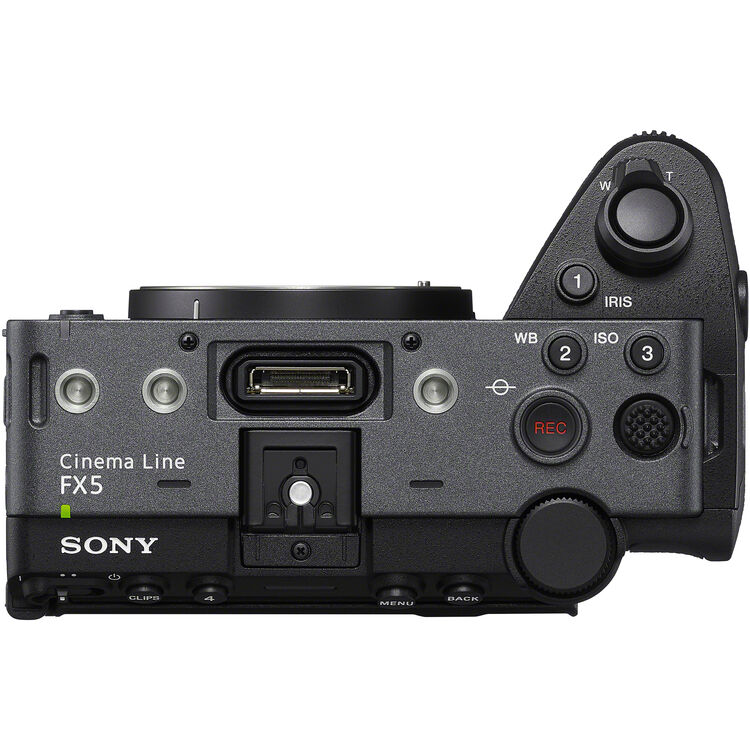
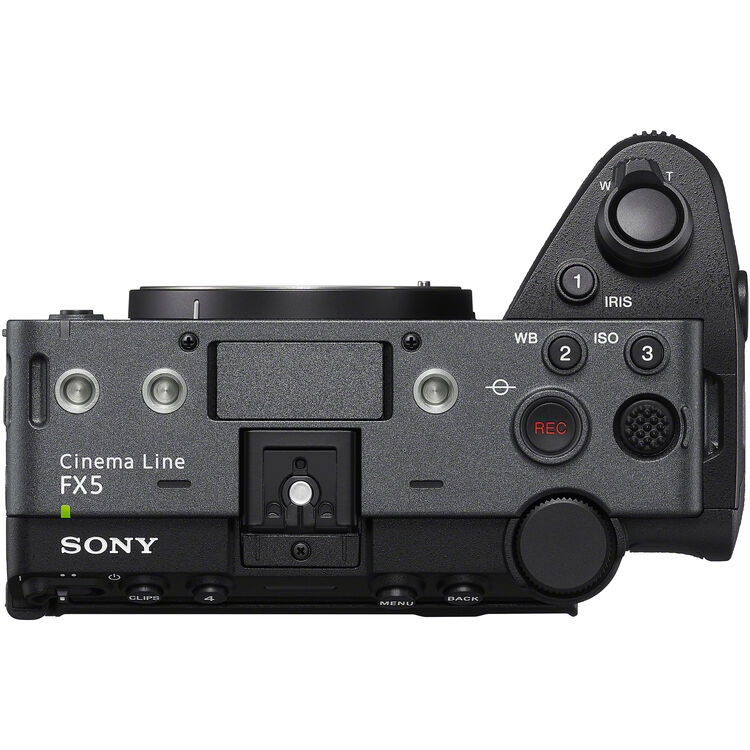
- Revamped user interface and BIG 6 menu with optimized control scheme and multifunction dial
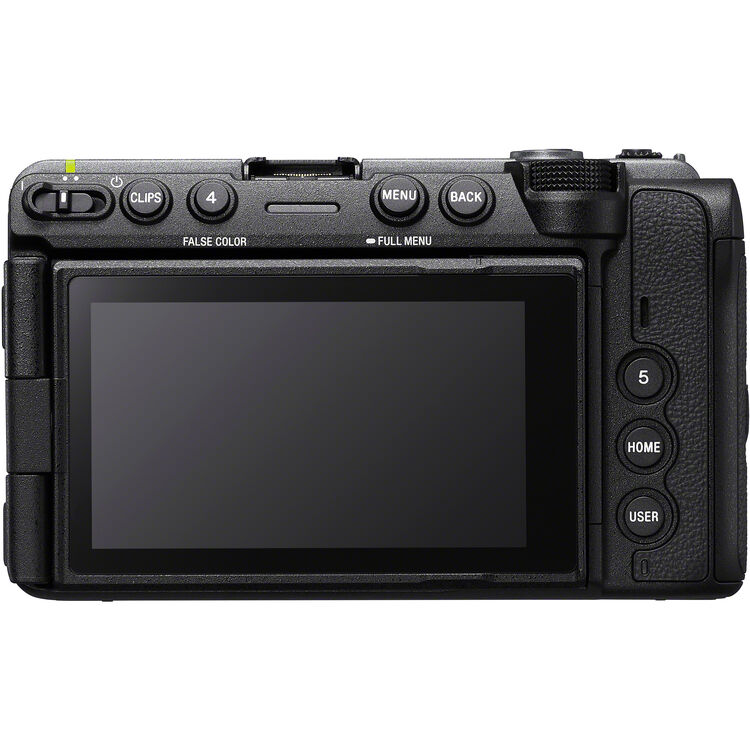
- Large 3.5" widescreen (16:9) 4-axis multi-angle touchscreen LCD and optional dedicated electronic viewfinder
- Additional monitoring tools: false color, waveform, vectorscope, focus map, and built-in anamorphic de-squeeze options
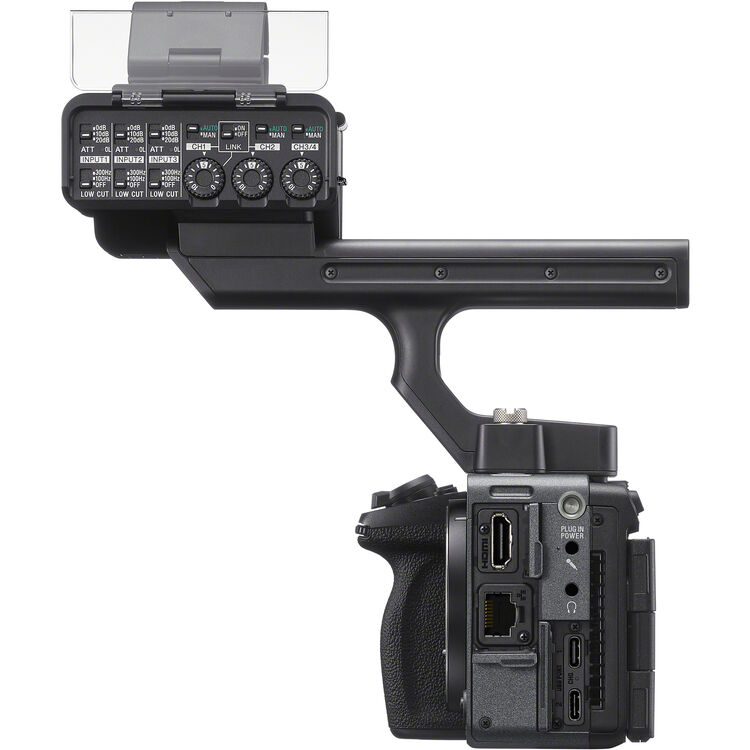
- Enhanced connectivity with two USB-C ports, Ethernet, full-size HDMI, and headphone and mic jacks
- Dual CFexpress Type A/SD memory card slots
- High-capacity NP-SA100 battery pack with over two hours of recording time
AI Processing and Autofocus
Powered by the new BIONZ XR2 processor and an integrated AI processing unit, the FX5 introduces Sony's latest intelligent autofocus technologies to the Cinema Line. Advanced subject recognition can identify people, birds, and animals while continuously maintaining accurate focus throughout changing scenes. Improved low-light autofocus performance allows the system to remain responsive even in challenging environments, helping filmmakers maintain confidence when lighting conditions become less predictable.
Sensor and Image Quality
- At the heart of the FX5 is a newly developed 16.6MP full-frame stacked Exmor RS CMOS sensor designed to maximize readout speed, dynamic range, and low-light performance.The stacked architecture enables faster data processing while reducing rolling shutter artifacts, making it well suited for fast-moving subjects and handheld productions.
- Combined with Sony's advanced color science, the sensor produces natural tonal transitions, refined highlight retention, and cinematic color reproduction suitable for both immediate delivery and extensive post-production workflows.
Open Gate and X-OCN Workflow
Expanding creative flexibility with internal Open Gate recording in a 3:2 aspect ratio, the FX5 allows creators to maximize the full sensor area while providing additional flexibility for reframing, multiple aspect ratio deliveries, and visual effects work. Internal X-OCN recording further enhances professional workflows by preserving tonal information and color precision within a raw-based format.Together, these recording options provide the latitude required for demanding commercial, cinematic, and post-production environments.
- Multiple flavors of X-OCN are available across Sony's CineAlta lineup, including the maximum quality X-OCN XT (Extreme) and balanced X-OCN ST (Standard). The FX5, owing to its more compact and more accessible design, is equipped with a handful of more compressed variants of X-OCN, including a pair of newly developed options:X-OCN LT (Light): Indie features, TV, commercials, documentaries, and live events-preserves editing flexibility and 16-bit linear encoding. (5K24 OG: 712 Mb/s)
- X-OCN C1: Content creation, online distribution, live events, documentaries-additional compression for longer runtimes and less discerning productions. (5K24 OG: 536 Mb/s)
- X-OCN C2: Prioritizes media storage and long runtimes. (5K24 OG: 429 Mb/s)
Connectivity and Professional Workflow
The FX5 integrates seamlessly into professional production environments through a combination of expanded connectivity and dedicated accessories. Dual USB-C ports, a full-size HDMI output, and compatibility with Sony's XLR Handle Unit support streamlined audio, monitoring, and data workflows. Timecode compatibility allows for accurate synchronization across multicamera productions, while optional accessories—including a dedicated electronic viewfinder and professional audio solutions—allow filmmakers to configure the camera for everything from lightweight solo productions to complex cinema workflows.
Ergonomics and Control
Every aspect of the FX5's physical design has been refined to improve efficiency during production. A redesigned button layout, six assignable custom buttons, and a new multifunction control dial place frequently used settings within easy reach, allowing operators to make adjustments without interrupting the creative process. Updated menu navigation and thoughtfully positioned controls create a shooting experience that feels familiar to existing Cinema Line users while remaining approachable for filmmakers transitioning from Sony Alpha cameras.
Stabilization and Handheld Shooting
The FX5 is engineered for productions that demand mobility without compromising image stability. An enhanced in-body image stabilization system offers improved roll correction, while dynamic active mode provides additional electronic stabilization during handheld movement. Whether filming weddings, travel productions, or dynamic content work, these technologies work together to produce smoother footage while reducing reliance on external stabilization equipment.
Comprehensive Monitoring Solutions
A redesigned 3.5" 4-axis multi-angle touchscreen provides greater flexibility when composing from high, low, or unconventional shooting positions. The wide 16:9 display offers an optimized viewing experience from modern cinema formats, while Sony's updated cinema-focused BIG 6 user interface streamlines access to critical camera settings. Professional monitoring tools, including waveform, vector scope, false color, histogram, zebra, peaking, and focus map, are built directly into the camera, giving filmmakers precise exposure and focus control without requiring external monitoring solutions. Anamorphic users will benefit from in-camera anamorphic de-squeeze for live monitoring of your image directly on the camera's display.
- Built-in 3.5" widescreen (16:9) 4-axis multi-angle touchscreen—wider than the FX3
- Full-size HDMI output
- In a first for the series, there is the optional dedicated DVF-EL1 Electronic Viewfinder
Dynamic Range and Triple Base ISO
Designed to perform across a wide range of lighting conditions, the FX5 incorporates dual-gain architecture with more than 16 stops of dynamic range to preserve highlight detail while maintaining clean shadow information. Triple Base ISO introduces an additional native sensitivity setting, including a new ISO 4000 option that delivers a cleaner low-light performance without increasing image noise. The result produces greater flexibility when working in uncontrolled environments while maintaining image quality throughout the exposure range.
Accessory Ecosystem: Expand the FX5's Capabilities
XLR Handle Unit
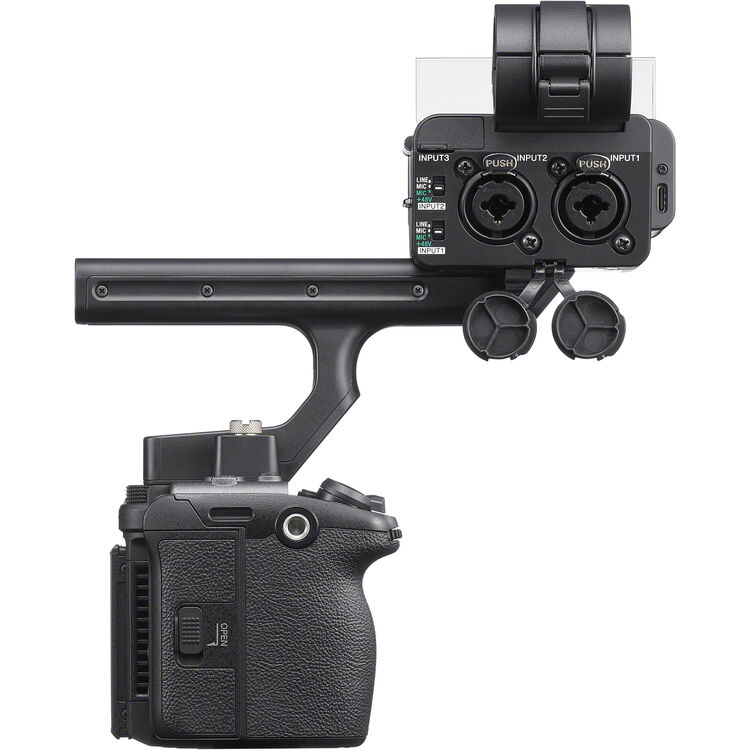
By adding the optional XLR-H2 XLR Handle Unit to the FX5, users can enjoy 32-bit float audio recording for the first time in an FX-series cinema camera.This feature takes the worry out of audio recording by eliminating clipping and offering an exceptional dynamic range. The XLR Handle Unit further improves ergonomics and connectivity with the addition of two XLR inputs, a mic mount, and a variety of physical controls to dial in audio settings.
DVF-EL1 EVF: High-Quality Monitoring in All Conditions
Handheld operation and bright environments are less than ideal for any camera's display-enter the DVF-EL1 Electronic Viewfinder. This removable electronic viewfinder, available separately, attaches directly to a proprietary connection on the top of the camera and provides a high-quality display that enhances ergonomics and works in all conditions. The display itself is an OLED with high refresh rate options, a wide color gamut, and high brightness. Plus, the ability to tilt 90° upwards makes it even more versatile.
Users should keep in mind that due to the location of the connector and its proximity to the Multi Interface Shoe that the EVF and XLR Handle Unit cannot be used at the same time.
Sony FX5 Cinema Camera with XLR Handle Unit
Imaging
Lens Mount
Sony E
Pixels
16.6 Megapixel (4992 x 3328)
Sensor Type
Full-Frame BSI Stacked CMOS
Image Stabilization
Sensor-Shift, 5-Axis
Exposure Control
ISO Sensitivity
Video
Triple Base: 800 / 4000 / 12800*
Native: 800 to 409,600
*Base ISO Is Dependent on Selected Color Space
Shutter Speed
Electronic Shutter
1/8000 to 1/24 Second
Exposure Modes
Aperture Priority, Auto, Manual, Sensitivity Priority, Shutter Priority
White Balance
Range: 2000 to 15,000K
Shutter Type
Electronic Rolling Shutter
Shutter Angle
4.2 to 360°
Video
Recording Modes
X-OCN LT 16-Bit
Up to 5K up to 59.94 fps
Audio Recording
4-Channel, 24-Bit at 48 kHz
4-Channel, 24-Bit at 96 kHz
4-Channel, 32-Bit at 48 kHz
4-Channel, 32-Bit at 96 kHz
ISO Sensitivity
Video
Triple Base: 800 / 4000 / 12800*
Native: 800 to 409,600
*Base ISO Is Dependent on Selected Color Space
Focus
Focus Mode
Automatic, Manual Focus
Viewfinder and Monitor
Viewfinder Type
Dedicated Viewfinder Available Separately
Monitor Type
Primary Monitor: Free-Angle Tilting 3.5" Touchscreen LCD
Flash
Interface
Memory Card Slot
Dual Slot: CFexpress Type A / SDXC (UHS-II)
Connectivity
Wi-Fi
Wireless
Wi-Fi
Media/Memory Card Slot
Dual Slot: CFexpress Type A / SDXC (UHS-II)
Internal Storage
No
Video I/O
1x HDMI Output
Audio I/O
2x XLR / 1/4" TRS Combo Microphone Input on Included Handle (+48 V Phantom Power)
1x 1/8" / 3.5 mm TRS Stereo Microphone Input on Camera Body (Plug-in Power)
1x 1/8" / 3.5 mm TRS Stereo Microphone Input on Included Handle (Plug-in Power)
1x 1/8" / 3.5 mm TRS Stereo Headphone Output on Camera Body
Power I/O
2x USB-C Input
Other I/O
2x USB-C (Shared with Power Input)
1x RJ45 (Ethernet)
Mobile App Compatible
Yes: Android & iOS
App Name: Monitor and Control
Functionality: Access Stored Files, Adjust Settings, Remote Control, and View Live Feed
Global Positioning (GPS, GLONASS, etc.)
GPS
*Via Connected Smartphone
Physical
Battery
NP-SA100
Weight
26.5 oz / 750 g (Body Only)
Environmental
Packaging Info
Package Weight
26.5 oz / 750 g (Body Only)
Dimensions (LxWxH)
5.2 x 3.1 x 3.4" / 132 x 79 x 86 mm
Sony FX5 Cinema Camera with XLR Handle Unit Q & A
Quick Compare
Add-On Savings
Accessories
Sony FE 50-150mm f/2 GM Lens (Sony E)
Rs 1259500
View
Sony FE 50mm f/1.2 GM Lens
Rs 499000
View

Sony FE 85mm f/1.4 GM II Lens
Rs 579500
View

Sony FE 200-600mm f/5.6-6.3 G OSS Lens
Rs 459500
View
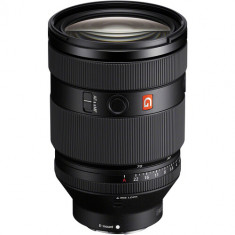
Sony FE 28-70mm f/2 GM Lens (Sony E)
Rs 939900
View

Sony FE 24-70mm f/2.8 GM II Lens
Rs 589500
View

Sony FE 300mm f/2.8 GM OSS Lens (Sony E)
Rs 1899500
View
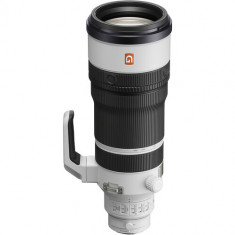
Sony FE 100-400mm f/4.5 GM OSS Lens (Sony E)
Rs 1399500
View
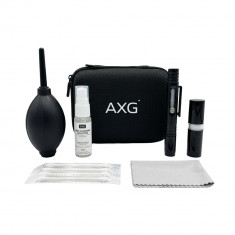
AXG Cleaning kit
Rs 4800
View
Related Products


